Arignar Anna Zoological Park
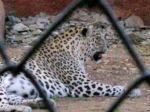
Arignar Anna Zoological Park (abbreviated AAZP), also known as the Vandalur
Zoo, is a zoological garden located in Vandalur, a suburb in the
southwestern part of Chennai, India, about 31 kilometres (19 mi) from the
city centre and 15 kilometres (9.3 mi) from
Chennai Airport.
Founded in 1855, the park was the first public zoo in India. It is
affiliated with the Central Zoo Authority of India. Spread over an area of
602 hectares (1,490 acres), including a 92.45-hectare (228.4-acre) rescue
and rehabilitation centre, the park is the largest zoological garden in
India.
The zoo houses 2,553 species of flora and fauna across 1,265 acres (512 ha).
As of 2012 the park houses around 1,500 wild species, including 46
endangered species, in its 160 enclosures. As of 2010, there were about 47
species of mammals, 63 species of birds, 31 species of reptiles, 5 species
of amphibians, 25 species of fishes, and 10 species of insects in the park.
The park, with an objective to be a repository of the state's fauna, is
credited with being the second wildlife sanctuary in Tamil Nadu after
Mudumalai National Park.
History
In 1854, Edward Green Balfour, the then director of the Government Central
Museum at Madras, persuaded the Nawab of the Carnatic to donate his entire
animal collection to the museum. This attracted large crowds and became the
nucleus of the Madras Zoo, which was founded in 1855. Balfour started the
zoo on the museum premises, and a year later it had over 300 animals,
including mammals, birds and reptiles. It was later transferred to the
Madras Corporation and shifted to People's Park near Chennai Central railway
station at Park Town in 1861, as it was growing. The municipal zoological
garden occupied one end of the 116-acre (47 ha) park and was open free to
the public.
By 1975, the zoo could no longer expand, and it had to be moved out of the
city because of space constraints and increased noise pollution due to the
city's high-density traffic. Hence it was planned in 1976 to maintain the
animals in the zoo in good simulated conditions.
In 1976, the Tamil Nadu Forest Department set aside 1,265 acres (512 ha) in
the Vandalur Reserve Forest on the outskirts of the city to build the
current zoo, which is the largest zoological garden in India and the Indian
Subcontinent and one of the largest in the world. Work started in 1979 at an
initial cost of 75 million, and the zoo in its new premises was officially
opened to public on 24 July 1985 by the then chief minister of Tamil Nadu M.
G. Ramachandran, when most of the works were completed. In the beginning,
the area was nothing more than a scrub jungle, with practically no tree
cover.
The zoo authorities and people from surrounding villages collected seeds of
different trees from neighbouring areas and afforested the zoo area.
In 2001, 92.45 hectares (228.4 acres) of land next to the park was acquired
to build a rescue and rehabilitation centre for confiscated and abandoned
wild animals, increasing the park's size to 602 hectares (1,490 acres).
In 1955, the zoo held the first All-India Zoo Superintendents Conference, as
part of the centenary celebrations. The zoo is named after Tamil politician
Arignar Anna.
Location and Boundaries
The park is located at Vandalur in the south-western part of the Chennai
Metropolitan Area, about 6 kilometres (3.7 mi) from Tambaram and about 15
kilometres (9.3 mi) from Chennai Airport. The whole of the park and the
proposed night safari zone lie within the Vandalur Reserve Forest area
located immediately to the southwest of Tambaram Air Force Station. The
eastern and western sides of the park are bordered by Hassan and Otteri
lakes, respectively. The main entrance of the zoo lies on the eastern side
of the Chennai - Trichy Highway (National Highway 45), also known as the
Grand Southern Trunk (GST) Road, near its intersection with the Vandalur–Kelambakkam
Road. The lion safari range lies in the north-eastern side of the park,
pervading into the reserve forest area, and the rescue and rehabilitation
centre and the proposed night safari zone are located at the southern side
across the Vandalur–Kelambakkam Road. The Vandalur railway station of the
Chennai suburban railway network is located at the north-western side, about
1 kilometre (0.62 mi) from the main entrance of the park.
Environment
The zoo is located within the Vandalur Reserve Forest area. The zoo's
ecosystem consists of dry deciduous and dry evergreen scrub forest
vegetation of the Eastern Ghats, a degraded forest consisting of mostly
thorny bushes, receiving an average annual rainfall of 1,400 millimetres (55
in) and an average annual temperature of 26 °C (79 °F). The terrain is a
gentle undulating one ranging in altitude from 10 to 100 metres (33 to 330
ft) with an average elevation of 50 metres (160 ft) above sea level.
The park was designed to keep the natural vegetation of the area intact
except where enclosures, roads, and structures had to be constructed.
Originally a sparse scrub forest invaded by weeds, consisting of species
such as Carissa sp., Gmelina sp., Eugenia sp., Acacia sp., Instia sp. and a
few other dry evergreen forest species, the park's vegetation was gradually
enriched by planting dry evergreen species. The entire campus has been
fortified by means of a compound wall, preventing any biotic interference in
the park and allowing the natural growth of vegetation, which give the park
the look of a natural forest.
The park is built based on the 'open zoo' concept. The order of priority is
local species, followed by regional, national, and international species.
The use of moats has made it possible to house predator and prey in extended
enclosures that provide a panorama of wildlife. There are over 75 moated
enclosures in the park. Enrichments in the form of ladders, climbing
materials, etc. are provided for the animals to move around the enclosure
freely.
Most of the exhibits in the zoo lie along a circular road covering about 2.5
kilometres (1.6 mi). Smaller mammals and other exhibits are located along
three inner roads. The park area is dotted with large open island-type
enclosures and chain-link fence, with camouflaged wet and dry moats, hidden
walls, and simulated natural environment for the residents of the park.
The remaining area makes up the free-range zone - an open area which makes
up the bulk of the park and where animals such as deer and jackals are left
to roam free. There are more than 500 deer of different varieties and an
equal number of jackals in the free-range zone.
In addition, there are four enclosures for deer - each housing about 30
animals. Deer and jackals are found in equal numbers and are known for their
fast-breeding ability, especially in their natural environment. The deer
jackal ratio is maintained by the 'natural method of selection - allowing
the stronger ones to prey on the weaker ones - a natural way of balancing
the ecological system.
Otteri lake situated on the north-western side within the park premises acts
as a roosting ground for a wide array of aquatic migratory birds such as the
open-bill stork, painted stork, white ibis, grey heron, night heron,
cormorants, darters, egrets, dabchicks, pelicans, great pelicans, glossy
ibis and moorhen, making it a bird watchers' paradise.
The 7-hectare (17-acre) lake, surrounded by a variety of trees, receives the
run-off water from nearly half the area of the park and attracts a large
number of migratory birds in October, November, and December. Both
terrestrial and aquatic birds of about 70 species congregate here during the
season. On average, around 10,000 migratory birds visit the lake each year.
About 230 saplings of Barringtonia, a species native to mangrove habitats,
have been planted inside the lake to attract more birds.
Exhibits
The park has 81 enclosures and more than 170 species of mammals, birds and
reptiles, such as the barking deer, blackbuck, sambar, sangai, nilgai, wolf,
tiger, jaguar, panther, hog deer, jackal, hyena, lion, giraffe, camel,
otter, llama, elephant, and a number of monkey species such as Nilgiri
langur, lion-tailed macaque, baboon, Hanuman langur and leaf-capped langur.
There are about 46 endangered animals of the Western Ghats, the Eastern
Ghats and the Indian subcontinent such as the Nilgiri macaques, as well as
other rare species including monitor lizard, chimpanzees, European brown
bear, Muscovy duck, giraffe, Bengal tiger, white tiger, lemur, macaque,
vulture, and star tortoises. The park is also home to exotic species such as
the Australian flightless bird species of emu and cassowary. The park
contains about 138 plant species, including cashew and eucalyptus. The dense
vegetation of the park supports about 56 species of butterfly.
Other Facilities
The park has tree-lined paved paths for long treks inside the campus,
enabling the visitors to walk 15 to 20 kilometres (9.3 to 12.4 mi) during a
visit. Battery-operated vehicles with a range of up to 80 kilometres (50 mi)
are available for rent.
There are about 9 such vehicles in addition to the 4 battery-operated vans
used for the lion safari and 4 diesel-run road rails used for going around
the zoo, and the zoo plans to purchase more. Each vehicle can carry 15 to 20
people, and each trip takes about an hour. A trial program of 20 rental
bicycles for visitors, including 5 for children, was launched in 2008 as an
eco-friendly option intended to reduce demand for the battery-operated cars.
An e-bike facility was also inaugurated on 20 February 2010.
Refreshment outlets include a snack bar run by the Tamil Nadu Tourism
Development Corporation (TTDC), an ice cream parlour and a soft drinks
counter - all near the entrance.
The park also maintains 16 toilets and nearly two dozen drinking fountains
within the premises for the visitors. The zoo is open to public from 8:30 am
to 5:30 pm except on Tuesdays, when the zoo carries out weekly maintenance
works. All the animals, especially the big cats, are back in their cages
after 5.00 pm and most tourists prefer to visit them before going on to the
other exhibits.
The zoo is fenced on all sides by means of the perimeter wall. The zoo
security is mainly carried out by the forest subordinate staff of rangers,
foresters and forest guards along with zoo security staff, who conduct
regular patrolling of animal enclosures, stores and other buildings. Night
security is carried out under the command of one range officer and other
subordinates. The zoo has also employed private security personnel. From 1
December 2010, four persons from a private security service have been
deployed along with forest rangers for night patrolling.
In mid-July 2013, a state-of-the-art ambulance facility for animals inside
the premises was inaugurated. The ambulance is equipped with an oxygen
cylinder, pulse monitor, critical care monitor, stretcher, surgical tools,
small cages, tranquilizing darts and emergency medicines.
Access
1. BY ROAD : 32 Kms. from Chennai City. From Tambaram, take bus service nos
A18, B18, E18, G18, M18, M18G, M18N, 18L, M52, G70, 70V, 70A, 114, M118,
118P, G118, 170A, 170L, 170T, 170K, M500, 500B, 500C, 515, 517, 518, 555,
555N, 566, 566B and alight at Vandalur Zoo Bus Stop.
2. BY TRAIN : Nearest Railway Stations are Vandalur (1 km) Tambaram (6 km).
3. BY AIR : Nearest Airport
Chennai International Airport (15 Kms).
Contact Information
Address: Vandalur, Chennai, Tamil Nadu - 600048
Tel: 044-2275 1089
Fax: 044-2275 0741
Email: directoraazp1@gmail.com
undo ...back